
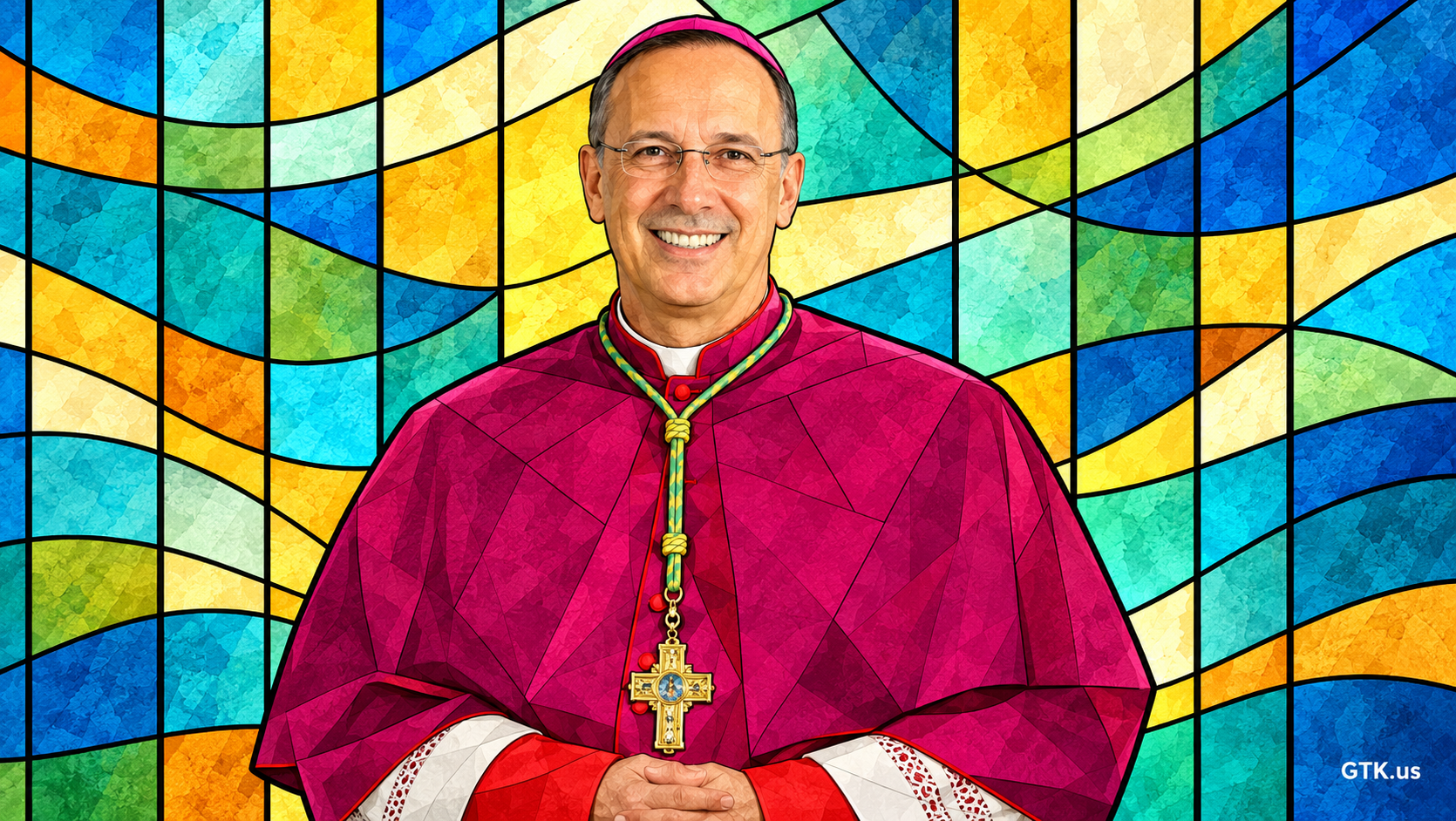
Best Known As Bishop Luis Rafael Zarama, Bishop of the Diocese of Raleigh in North Carolina
Who is Luis Rafael Zarama?
Bishop Luis Rafael Zarama is the sixth Bishop of Raleigh and the first Hispanic and first foreign-born bishop to lead the diocese. A Colombian-born priest who gave nearly three decades to the Archdiocese of Atlanta before Pope Francis sent him to North Carolina, he is known for building unity across cultures, for a warm and self-effacing manner, and for a motto he lives plainly: God is love.
Get To Know Bishop Luis Rafael Zarama
Bishop Luis Rafael Zarama likes to tell young people never to be ashamed of where they come from. He says it because he has lived it. Learning a new language was never the hard part, he says. The real challenge is stepping into a new culture without losing who you are, opening yourself to what it offers while sharing the richness you already carry. He calls it a mutual enrichment, and it is close to the center of how he understands his whole life.
Warm, unassuming, and quick to laugh at himself, he jokes that he speaks "one and a half languages," a nod to an English he still calls a work in progress. People who worked with him for years tend to describe him the same way, as caring, collaborative, and genuinely kind, a man who reminds the people around him that they are dealing with human beings, not paperwork. He is the first to admit he never went looking for any of the roles that found him, and he can tell the story of each one like a man still a little surprised he said yes.
He grew up in Pasto, high in the mountains of southern Colombia, the oldest of six children in a close family with farms and businesses and a father who had once been a teacher. It was a normal childhood, by his telling, full of horses he loved to ride and the occasional bit of mischief he was not supposed to get into. The priesthood came slowly. A priest dear to the family, Padre Alvarez, used to share meals in their home, and watching him planted an early thought that faded as Zarama grew and imagined other lives for himself, a pilot maybe, or a cowboy. The call kept returning until he could not ignore it, and it was at a Cursillo that he finally admitted the truth to himself, in words as plain as the man: "Okay, I need to do this."
Coming to the United States was the one part he never wanted. His parents had settled in Orlando and his father kept urging him to follow, and Zarama did not like the idea at all. A chance connection through his canon law faculty in Bogotá brought him to Atlanta for a couple of days, he liked the city, and that was that. The early years were hard. He arrived with almost no English, and it got hard enough that he tried to leave, stopping to say goodbye to a priest on his way out, who simply took his car keys and would not give them back. Three days later, Zarama decided to stay. Looking back, he does not point to that as the moment he managed to remain in America. He points to it as the moment he began to become himself, formed not simply by his father or his friends or the Colombia he came from, but through all of it, the leaving, the struggle, the new language, the near-surrender.
His first twelve years as a priest he still calls the most beautiful of his life, especially the decade pastoring two small churches thirty miles apart in the north Georgia hills, running seven Masses a weekend and loving every mile of it, because what makes the priesthood beautiful, he says, is simply being with people. The bigger roles came the same way they always had, by surprise. When Archbishop Gregory asked him to become vicar general, he joked that it took away his honeymoon as a priest, and when the call came naming him a bishop, he was so stunned the archbishop finally had to say, "Luisito, please, please say something," and all Zarama could manage was "Wow." Even now, leading a growing diocese, he would rather drive the North Carolina countryside praying the rosary and marveling at the tractors in the fields than dwell on the size of his territory. He remembers sitting alone in the bishop's chair in his cathedral, no ceremony, no crowd, overwhelmed, asking himself what he was doing there before the answer settled in. What he wants most is for people to know how much God loves them, a love he insists is never soft or sentimental but a real relationship that asks something of us. His motto puts it in three words, God is love, and after a life of surprises he never went looking for, he says the rest just as plainly: we can never lose hope.
WHO: Luis Rafael Zarama | WHOist: John Mar Turbanada | 29th August 2026 | Source: Research | Sponsor: GTK ME | Known & Remembered | Verified by: Charles J de Guara
The information presented reflects what was known and inferred at the time of this writing.