
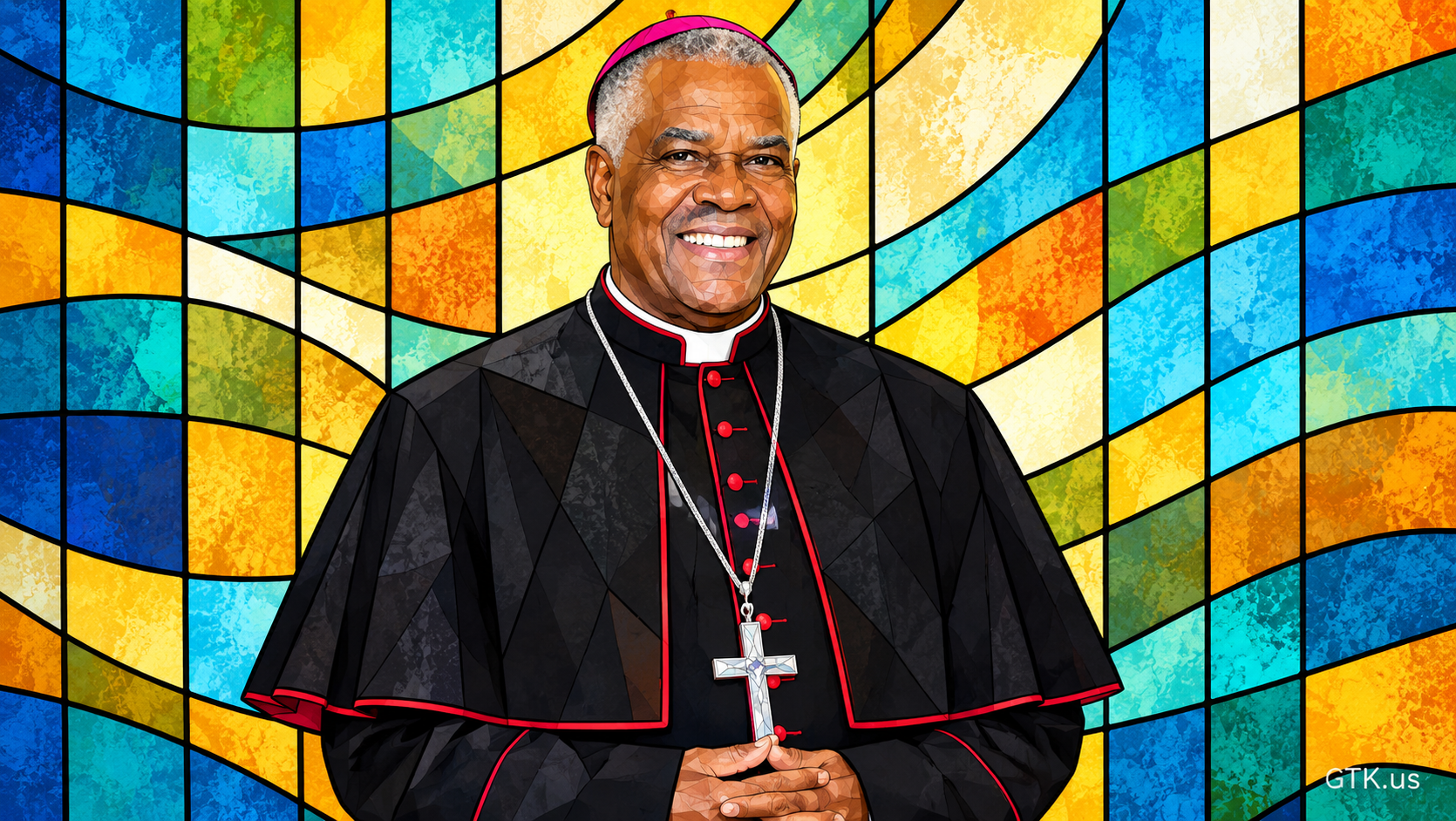
Best Known As Bishop Jacques E. Fabre-Jeune, C.S., the 14th Bishop of Charleston, South Carolina
Who is Jacques E. Fabre?
Bishop Jacques Fabre-Jeune is the 14th Bishop of Charleston and the first Haitian-American to lead a U.S. diocese. A Scalabrinian missionary shaped by decades of service to immigrants and refugees, he is known for meeting people in five languages, for helping a poor mission build its own church, and for a belief that everyone carries gifts worth recognizing.
Get To Know Bishop Jacques Fabre-Jeune
Bishop Jacques Fabre-Jeune loves people, and he says so plainly. He has spent nearly forty years going wherever the Church sent him, learning the language of whoever he found there, and he tends to meet each person the same way, looking for the humanity in them before anything else.
Warm and unassuming, a man who loves music and takes people as he finds them, he has carried that spirit since boyhood. He was born in Port-au-Prince, one of six children, and his mother left for the United States to find factory work when he was young, so his eldest sister, barely eighteen, helped raise the family until they could follow her north. He joined his mother in Brooklyn as a teenager. He felt the pull toward priesthood as a boy, lost it for a while, and found it again in college, where he had been studying to be an engineer until a professor's offhand remark about selling yourself convinced him he was on the wrong road. He called his mother and told her what he had known since he was a child.
That calling led him to the Scalabrinians, a missionary order devoted to immigrants and refugees, and being an immigrant himself, he felt he belonged there. The decades since read like a map of the places people go looking for a better life. He served Haitians and Hispanics at his first Florida parish, stood with Haitian detainees as a chaplain at Guantanamo Bay, and spent more than a decade pastoring a parish in the Dominican Republic in a community strained by ethnic tension. In Georgia he took charge of a struggling Latino mission that had once gathered for Mass outdoors under blue tarps, and he watched its people build their own church, largely with their own hands and their own dollars, one weekend of taco sales at a time. He liked to say the point was never to hand the poor everything, but to help them develop their talents and see what they could do.
For all the countries and languages, five in all, what he keeps coming back to is something plain. He describes his own way of working as nonjudgmental, and he means it as more than a word. He looks for the humanity in everyone and asks people to do the same, to forgive old mistakes and accept each other's frailties, the way you might peel back the leaves of a head of lettuce to find the fresher ones underneath. When people point out that he is the first Haitian-American to lead a U.S. diocese, he tends to wave it off, worried a label like that will put him in a box. What he would rather people see is what he told the crowd in Charleston the day he arrived, walking down off the stage to stand among them rather than above them. We are, he likes to say, one humanity, and we are better off when we bring it together.
WHO: Jacques E. Fabre | WHOist: John Mar Turbanada | 29th August 2026 | Source: Research | Sponsor: GTK ME | Known & Remembered | Verified by: Charles J de Guara
The information presented reflects what was known and inferred at the time of this writing.