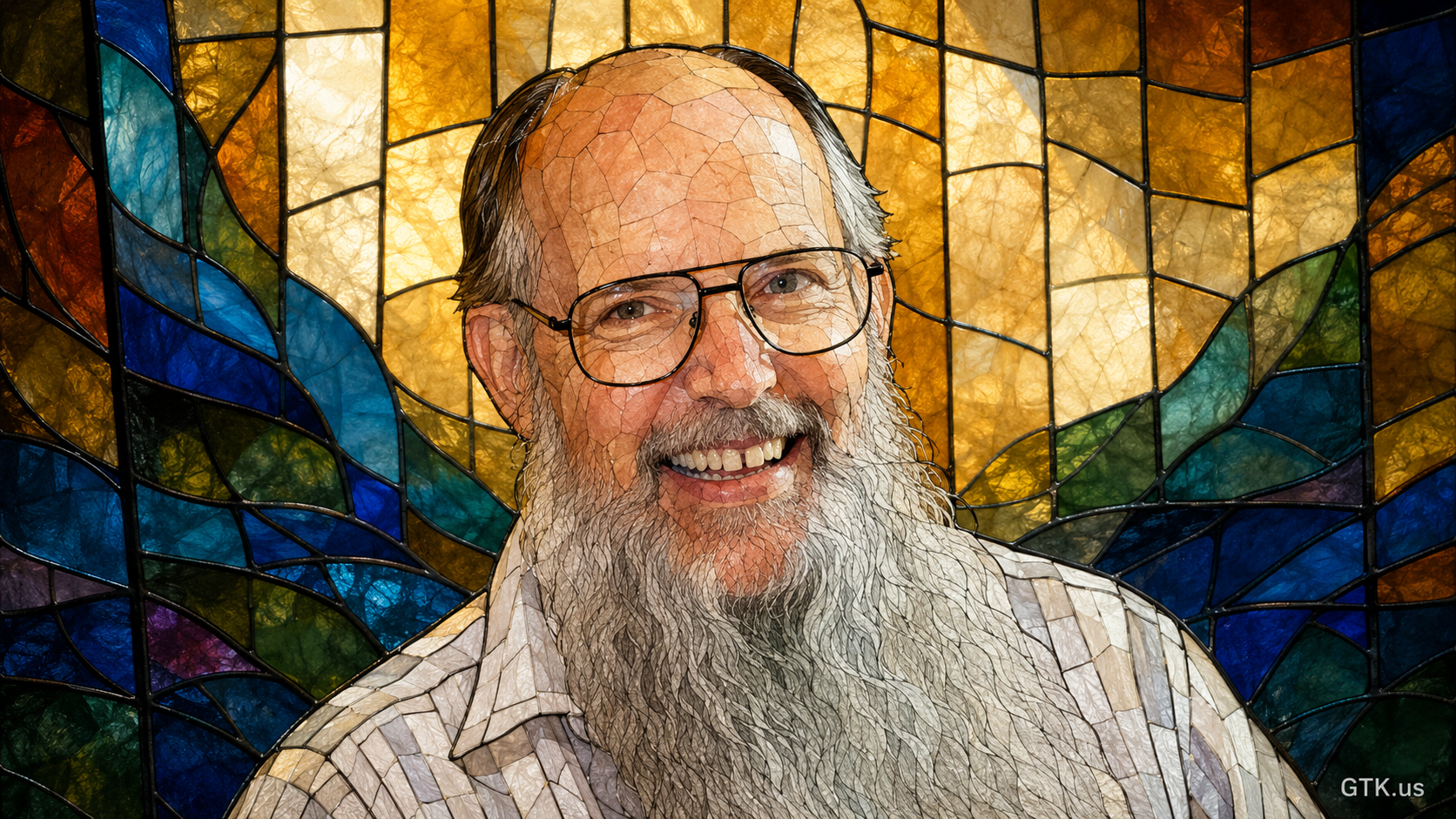
Best Known As Father Bill Zamborsky, Pastor of Our Lady of the Springs Catholic Church in Ocala, Florida
Who is Bill Zamborsky?
Fr. Bill Zamborsky is a Catholic priest, Cleveland native, and relational pastor whose public story is closely tied to fifty years of parish ministry, a deep spiritual connection to Alaska, and a lifelong habit of turning every community he serves into family.
Get To Know Father Bill Zamborsky, Pastor of Our Lady of the Springs Catholic Church in Ocala, Florida
Fr. Bill Zamborsky, a Cleveland-born priest who has spent the last fifty years building a home in Florida, one parish at a time. The third of eight children raised in Parma, Ohio, he grew up inside the daily rhythms of parish life, serving as an altar boy, learning from teachers who left their mark on him, and dreaming as a fourth grader of becoming a football player, a pilot, a policeman, or a priest. Of those four paths, priesthood is the one that stuck. Ordained for the Diocese of Orlando in 1974, he has since served eight parishes across five decades, from DeLand to Ormond Beach to Ocala, where he now serves as pastor of Our Lady of the Springs.
Fr. Bill describes himself as relational rather than mystical, someone who meets God most fully in the Eucharist and in the people in front of him. That same instinct has carried him far beyond Florida, drawing him back to Alaska again and again, where he has found a wilderness that stirs something in him he still struggles to fully explain. Those who know him describe a priest with a quick sense of humor, a lasting loyalty to Cleveland sports, and a habit of turning every place he serves into family.
WHO: Bill Zamborsky | WHOist: John Turbanada | 19th July 2026 | Source: Research | Sponsor: GTK ME | Known & Remembered | Verified by: Charles J de Guara
The information presented reflects what was known and inferred at the time of this writing.
Father Bill Zamborsky | Cleveland Native
Bill Zamborsky grew up in Cleveland, Ohio, a city shaped by working-class parishes, large Catholic families, and the kind of faith that shows up not in grand gestures but in daily routines. He was the third of eight children, raised in a household where the Church was simply part of how life was organized. As a boy at St. Charles Borromeo Parish in Parma, he served as an altar server and later as a reader, finding in the church building, as he would later describe it, a place that felt like home and security.
The teachers at St. Charles left a lasting impression. He remembers Sister Mary Lucy, his first or second-grade teacher, with particular warmth not for anything specific she did, but for the certainty that she loved him. He remembers Sister Mary Jerome, who was great with boys. He remembers Sister Mary Arthur, who made English almost as interesting as math. And he remembers Mr. Miller, who started the music program and gave him a love of music that, in his own words, sustained him throughout his life.
As a fourth grader, he dreamed of becoming a football player, a pilot, a policeman, and a priest. Of all those possible paths, he has said with a laugh, the priesthood is the one that stuck. His older brother entered seminary three years ahead of him, a footstep worth following, even if his brother would eventually leave and he would continue. On Pentecost Sunday, 1974, he celebrated his First Mass at St. Charles Parish, with a bishop from Florida present for the occasion. His vocation, he has said, was shaped partly in his home and family, but secondarily in that parish, the place where his faith was nurtured and where he first understood what belonging to a church really meant. He has been a Cleveland sports fan ever since a fact he describes as a tribute to both his loyalty and his penchant for suffering.
WHO: Bill Zamborsky | WHOist: John Turbanada | 1st July 2026 | Source: Research | Sponsor: GTK ME | Known & Remembered | Verified by: Charles J de Guara
The information presented reflects what was known and inferred at the time of this writing.
Father Bill Zamborsky | Nature Lover
Fr. Bill Zamborsky has always been drawn to the outdoors, open spaces, wild landscapes, and places where the natural world feels larger than ordinary life. He has spoken about loving time spent in nature and finding in it a particular kind of spiritual presence that quieter, more familiar settings do not always provide. Nowhere has that drawn him more completely than Alaska.
Ten years ago, he spent three months on sabbatical in Sitka, in the Diocese of Juneau. He has returned four times since. Each time, he describes it as a vacation. Each time, he ends up serving in remote missions anyway because that appears to be simply how he is built.
The inside passage, with its towns and villages dotting the shoreline, its mountains and lakes and streams, its salmon, bears, whales, eagles, otters, halibut, and sea lions, none of it left him unchanged. He has written about it with unusual candor: that the geography and wildlife of southeast Alaska stir his soul with the presence of God in a way no other place on earth does, that the raw and untamed beauty of it whispers the power of God while teaching the true meaning of fear of the Lord. He describes the landscape as touching his soul sometimes surreptitiously, with the dangerous presence of an all-loving God; sometimes brazenly, with the benign presence of an all-powerful one. He is not always sure which, and he says so honestly.
His visits have not all been peaceful. During his first trip, a dangerous hike in Skagway brought him face to face with his own mortality, a mix of poor choices and, he believes, God's providence. During his second year, he left early under a dark cloud of cancer, from which he was healed or protected, grateful for either. He returned a third time simply for the joy of it. When he walked into the church in Sitka for the first time, he felt immediately at home, the same Jesus as in Florida, the same people he loves and who love him. For his 50th anniversary of ordination, he chose Alaska again, this time on a cruise. Some places, once they find you, do not let go.
WHO: Bill Zamborsky | WHOist: John Turbanada | 1st July 2026 | Source: Research | Sponsor: GTK ME | Known & Remembered | Verified by: Charles J de Guara
The information presented reflects what was known and inferred at the time of this writing.
Father Bill Zamborsky | Longtime Priest in Florida
Fr. Bill Zamborsky was ordained on June 1, 1974, for the Diocese of Orlando, and has served there ever since. Over fifty years, his assignments have taken him to St. Peter in DeLand, St. James Cathedral, Blessed Trinity in Ocala, St. John Vianney in Orlando, St. Charles Borromeo in Orlando, Holy Spirit in Mims, Prince of Peace in Ormond Beach, and Our Lady of the Springs in Ocala, where he continues as pastor today. Each place was different. Each one, he has said, became family.
That word family comes up consistently when Fr. Bill talks about his priesthood. It is not a metaphor he uses lightly. It reflects something he appears to have built deliberately and patiently in every parish he has served. When he looks back on fifty years of ministry, it is not the titles or the assignments that stand out. It is the people.
The depth of those connections becomes visible in small but meaningful ways. When Prince of Peace Catholic Church in Ormond Beach celebrated its 50th anniversary, a parish he had previously served as pastor, Fr. Bill wrote them a letter. In it, he reflected on fifty years of Catholic tradition as barely a blip on the screen of the Church's 2000-year history, and described Divine Mercy as not a benchmark of any sort but the heritage and joy of God's love. It was the letter of a man who had not simply moved on. He had carried the parish with him. He has long ago come to consider Florida his home, and Florida, across eight parishes and five decades, has clearly come to consider him its own.
WHO: Bill Zamborsky | WHOist: John Turbanada | 1st July 2026 | Source: Research | Sponsor: GTK ME | Known & Remembered | Verified by: Charles J de Guara
The information presented reflects what was known and inferred at the time of this writing.
Father Bill Zamborsky | Knows What It Means to Stay
Fr. Bill Zamborsky has described himself plainly and without apology as relational rather than mystical. He does not encounter God primarily through abstraction or quiet contemplation. He encounters God in the Eucharist and in the people sitting in front of him and has built fifty years of priesthood on that single conviction. What that kind of commitment builds in a person over time is not simply experience. It is a particular understanding of what belonging actually requires.
That understanding shows up in how he speaks about every parish he has served, not as a stop along the way, but as a community where people became family. It shows up in the parishioners who knew him well enough to give him a skydiving jump for his 50th birthday, the kind of gesture that only makes sense when a real bond already exists. It shows up in the letter he wrote to Prince of Peace Parish on their 50th anniversary, long after he had moved on from a man who had not simply left, but had carried the parish with him.
That same instinct traveled with him to Alaska. When he walked into a church in Sitka for the first time, far from Florida, far from everything familiar, he felt immediately at home. The same Jesus. The same people he loves and who love him. What he has learned through fifty years of staying is not tied to any one parish or place. It is an understanding of presence itself that belonging is not built through arrival, but through the slow and deliberate work of remaining.
WHO: Bill Zamborsky | WHOist: John Turbanada | 1st July 2026 | Source: Research | Sponsor: GTK ME | Known & Remembered | Verified by: Charles J de Guara
The information presented reflects what was known and inferred at the time of this writing.
